
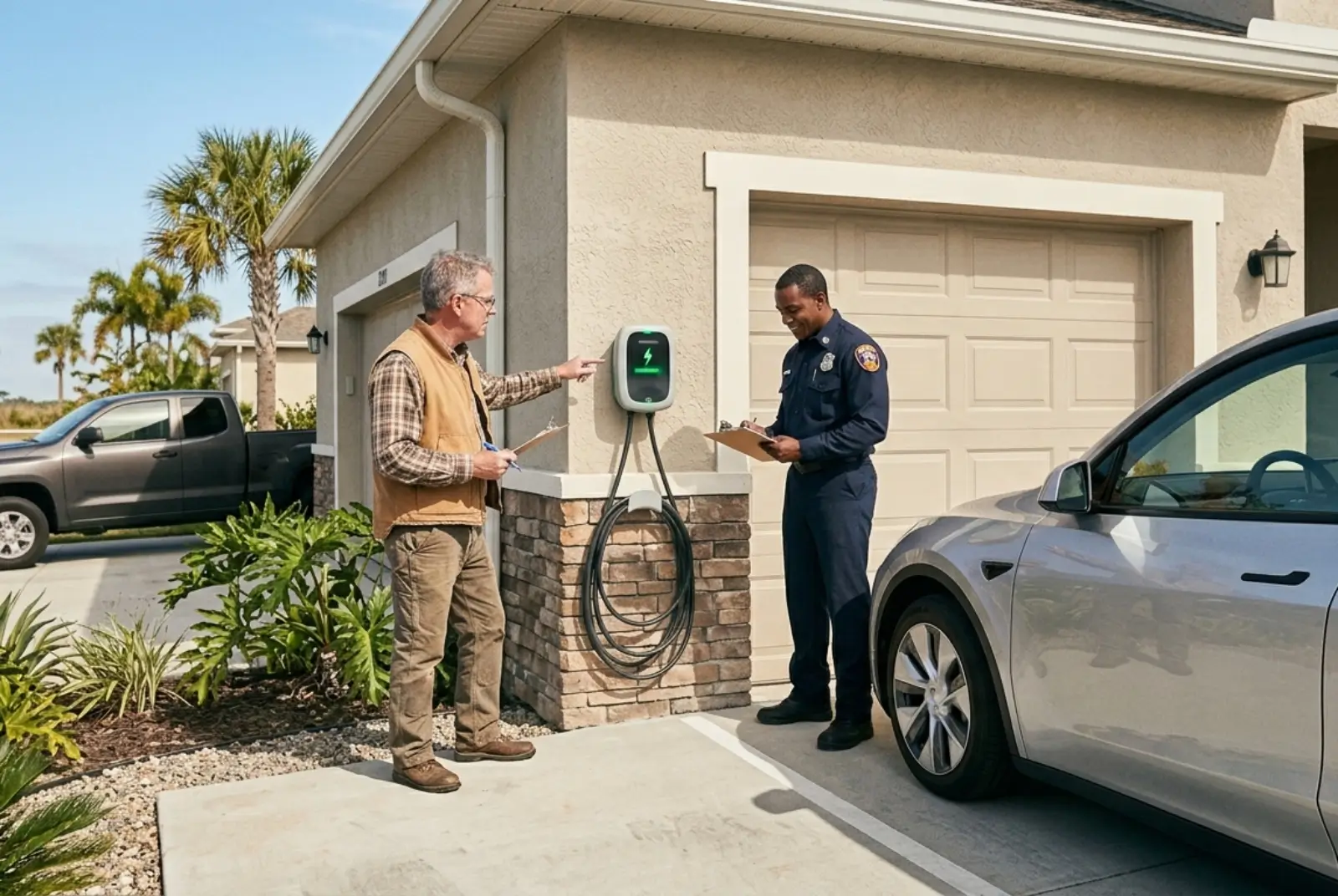
Electric vehicles are no longer a coastal curiosity or a big-city trend. There are about 335,000 registered electric vehicles (EVs) in Florida, and it is among the top-ranking states in EV adoption. The growing popularity of this vehicle type is enough to make landlords think about installing a dedicated wallbox charger, but is it worth it?
The honest answer is that it can depend on your property type, tenant pool, and how you structure the investment. Here’s a breakdown to help you make a clear decision about the potential upgrade.
Key Highlights:
- EV adoption in Florida is real, but Pace hasn't hit a tipping point yet. With roughly 335,000 registered EVs statewide and only about 8 fast-charging plugs per 1,000 EVs, demand is growing faster than public infrastructure, which creates an opening for rental properties to fill the gap.
- Wallboxes and standard outlets are not interchangeable solutions. A wallbox charges a vehicle in 4 to 8 hours with built-in safety features, while a standard outlet can take up to 24 hours and carries real risks like overheating or tripped breakers if used regularly.
- Installation costs vary widely depending on your property's electrical setup. A Level 2 charger typically runs $1,200 to $2,500, but that figure climbs quickly if your panel needs an upgrade or the installation site is far from the existing electrical panel.
- Ongoing costs matter as much as the upfront investment. Permitting, electricity usage, and periodic maintenance all factor into the true cost of ownership, and landlords need a plan for who absorbs those expenses.
- The amenity can justify a rent premium for the right tenant pool. Because Florida's charging infrastructure still lags behind demand, tenants who rely on their EVs daily are often willing to pay more for reliable, faster charging at home.
Why the Question is Important Now
EV adoption continues to grow in Florida, yet there are about 8 fast-charging plugs for every 1,000 EVs on the road. Public charging stations have started appearing along Highway 90 and near Pace's retail corridors, and although Pace has not hit an EV tipping point, the trajectory is clear enough that landlords can no longer ignore the potential need.
It also begs the question: why install a dedicated wallbox when EV users can just charge their cars using an outlet? This is something worth exploring, considering the costs that come with upgrading your property to make it EV-friendly.
EV Charging: Wallbox vs. Socket
Here are the key differences between the power sources:
Wallbox
A wallbox is a hard-wired or plug-in EV charging station you can install in your rental property, and it is specifically designed to provide continuous, high-amp loads for faster charging. It can even come with safety features like ground-fault protection and thermal monitoring to prevent overheating.
For drivers who want to monitor the progress of charging, modern wallbox units have features like Wi-Fi connectivity, remote app control, usage tracking, and even dynamic load balancing. For landlords, this can be a useful function when you need to implement fees for EV charging.
With dedicated equipment for EV charging, charging can take between 4 and 8 hours. That can be a huge advantage if you have more than one tenant who uses an EV.
Socket
A typical household outlet delivers only about 1 kW to 2.3 kW, which means the charging time will be significantly longer. A full charge can take up to 24 hours, which is inconvenient for the user of the charger.
Outlets are not built to handle hours of heavy and consistent electrical draw, which can cause problems for your electrical system. You can encounter issues like overheating, tripped breakers, or fire hazards unless you upgrade to an industrial-grade, EV-rated outlet.
Since it’s a direct power source, tenants won’t have digital controls, monitoring, or communication features. It’ll be harder to calculate how much power the charger uses, so separating or including charges can become complicated.
The Real Costs Involved
Chargers fall into different levels. A Level 1 charger comes free with EV purchases, which means if you have your own, it comes at no cost to you. However, it does charge more slowly than higher-tier EV chargers on the market.
Level 2 chargers are where the real investment begins, since they can range anywhere from $1,200 to $2,500 for the hardware and installation. It can depend on how far the home’s electrical panel is or whether it needs an upgrade. Even then, you need to account for ongoing costs like:
- Permitting: You will need an electrical permit for Pace rental properties when you plan to install a new Level 2 EV charging station.
- Ongoing Electricity Costs: Whether it will be absorbed by the landlord or billed back to the tenant, you still need to determine the power consumption of your EV chargers.
- Maintenance: EV charging stations require occasional maintenance or replacement after a couple of years, depending on how often they are used.
How It Helps Your Rental Property
Despite the growing number of EV owners in the state, Florida has yet to improve its infrastructure to accommodate the specific needs of electric vehicles. As a rental property owner, you can take advantage of the situation by offering what certain tenants may need.
You can appeal to a unique tenant pool, especially those who use their electric cars regularly and need to charge faster. You can charge a premium for this amenity, and those who need it will be willing to pay the price.
FAQs
Is it worth installing an EV charger in a Pace, FL rental property?
- It depends on your tenant pool and property type. If you rent to professionals, military-affiliated tenants, or anyone likely to own an EV, a dedicated charger can help you stand out and may support a rent premium. For lower-rent or budget-focused units, the investment is harder to justify right now.
What's the difference between charging with a wallbox and a regular outlet?
- A wallbox is purpose-built for EV charging, delivering power faster (4 to 8 hours for a full charge) with safety features like ground-fault protection. A standard outlet charges much more slowly (up to 24 hours) and isn't designed for the sustained electrical draw an EV requires, which raises the risk of overheating or tripped breakers.
How much does it cost to install a Level 2 EV charger?
- Hardware and installation typically cost between $1,200 and $2,500. That number can increase significantly if your property's electrical panel needs an upgrade or if the charger has to be installed far from the panel.
Maximize the Value of Your Investment
A significant upgrade like an EV charging station doesn't automatically draw in renters who use electric cars. You have to market your property accordingly for it to attract the right tenants. You also have to understand what permits you might need and how you can maintain the charger to prolong its lifespan.
With Grand Realty, you can reap the benefits of your investment and ensure that it does what it’s meant to do, which is attract tenants and improve tenant satisfaction.
Contact us, and let’s discuss an arrangement that works for you.
More Resources:
Property Marketing Tips to Attract Tenants in a Tough Market in Pace, FL
1031 Exchange: Avoid Capital Gains Tax for Pace, FL, Landlords